- info@aza.org.uk
- United Kingdom,London
- +44 750 309 23 22


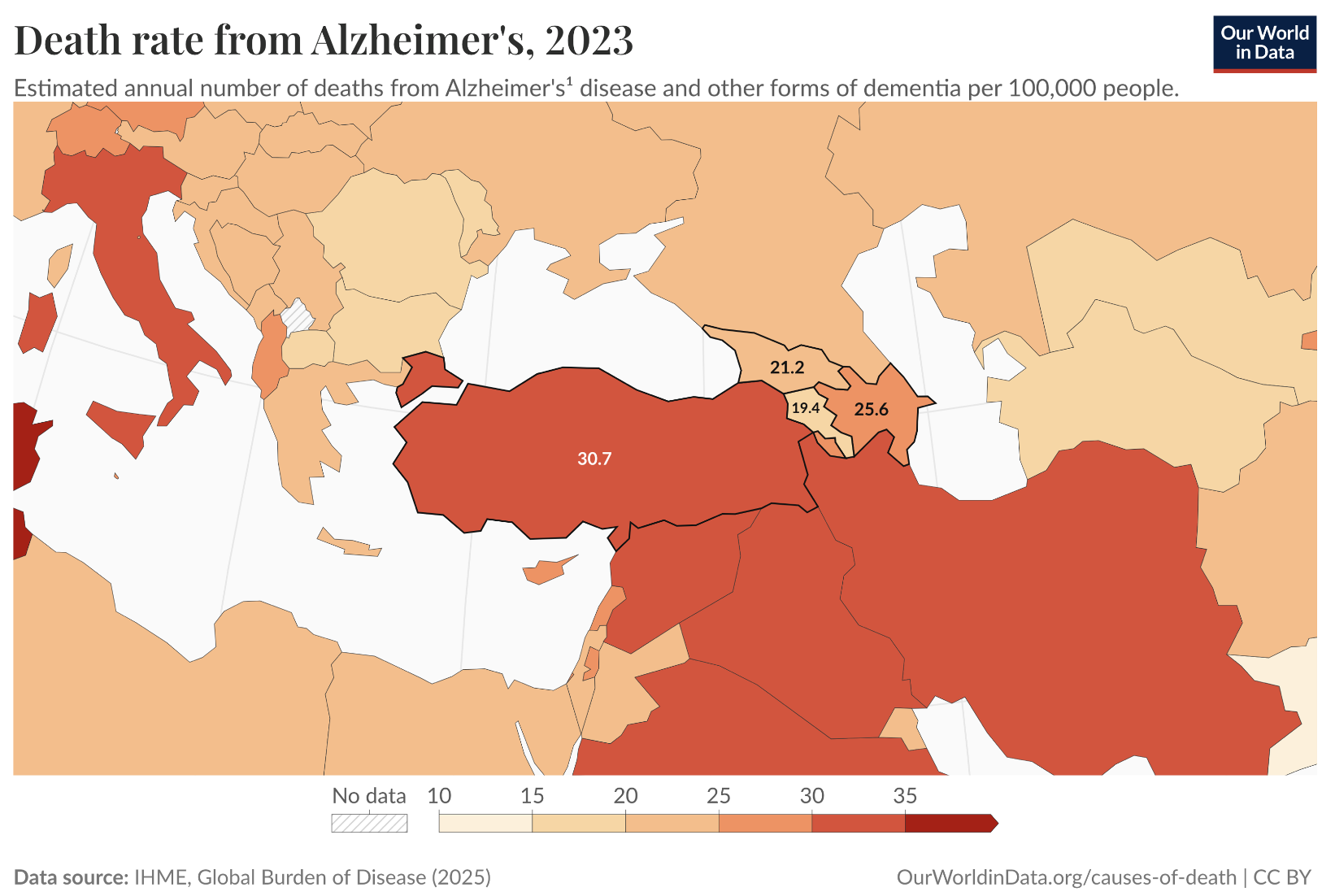
As populations continue to age, Alzheimer's disease and other forms of dementia are becoming increasingly significant public health challenges across the globe. Although much attention is often focused on Europe and North America, countries in the South Caucasus—including Azerbaijan, Armenia, and Georgia—are also experiencing demographic changes that will lead to a growing number of people living with dementia in the coming decades.
Dementia is an umbrella term describing a group of conditions that progressively impair memory, thinking, language, behaviour, and the ability to perform everyday activities. Alzheimer's disease is the most common cause of dementia, accounting for an estimated 60–70% of all cases worldwide. While dementia primarily affects older adults, it is not considered a normal part of ageing. Early diagnosis and appropriate support can help individuals maintain independence and quality of life for longer.
Recent estimates indicate that approximately 47,800 people in Azerbaijan are living with Alzheimer's disease or other dementias, highlighting the growing impact of cognitive disorders on the country's healthcare system and families. The age-standardised prevalence rate is estimated at 629.5 cases per 100,000 population, which is comparable to neighbouring countries in Central Asia.
Mortality data also demonstrate the increasing health burden of dementia. According to the latest World Health Organization estimates, 1,370 deaths in Azerbaijan were attributed to Alzheimer's disease and other dementias in 2020, accounting for 1.74% of all deaths nationwide. The country's age-adjusted mortality rate was 17.36 deaths per 100,000 people, ranking Azerbaijan 98th globally for dementia-related mortality.
Despite these figures, dementia is believed to remain underdiagnosed in Azerbaijan. Many families attribute memory loss and confusion to "normal ageing," delaying medical assessment until symptoms become severe. Limited public awareness, social stigma surrounding cognitive decline, and restricted access to specialised memory clinics further contribute to delayed diagnosis and treatment.
The burden of dementia extends across the South Caucasus. According to recent Global Burden of Disease estimates:
Azerbaijan: approximately 47,757 people living with dementia
Georgia: approximately 43,615 people
Armenia: approximately 28,418 people
Together, these three countries account for well over 119,000 individuals living with dementia, and this number is expected to rise substantially as life expectancy increases and populations continue to age.
Although the prevalence rates are similar across the region, healthcare systems face common challenges, including limited specialist services, shortages of trained healthcare professionals, insufficient long-term care facilities, and a heavy reliance on informal family caregivers.
The growing prevalence of Alzheimer's disease is largely driven by demographic change rather than an increase in individual risk. Azerbaijan's population is living longer than previous generations, meaning more people are reaching the ages at which dementia becomes more common.
Research also shows that several modifiable risk factors contribute to dementia, including hypertension, diabetes, obesity, smoking, hearing loss, physical inactivity, and lower educational attainment. Addressing these risk factors throughout life offers one of the greatest opportunities to reduce the future burden of dementia.
Recognising dementia early allows individuals and their families to access appropriate medical care, plan for the future, and benefit from treatments and support services that may help slow symptom progression.
Warning signs include:
Persistent memory loss affecting daily life
Difficulty finding words or following conversations
Confusion about time or place
Poor judgement and decision-making
Personality or behavioural changes
Difficulty completing familiar tasks
Seeking medical advice when these symptoms first appear can lead to earlier diagnosis and improved quality of life.
As the number of older adults continues to grow, Alzheimer's disease and other dementias are likely to become one of the most important neurological and public health challenges facing Azerbaijan and the wider Caucasus region.
Meeting this challenge will require greater public awareness, improved access to early diagnosis, expanded specialist dementia services, support for family caregivers, and national strategies focused on healthy ageing and dementia prevention.
With coordinated action from healthcare professionals, policymakers, community organisations, and families, Azerbaijan can improve the lives of thousands of people living with dementia today while preparing for the growing needs of future generations.




© Copyright 2021. Made by Mr.Josh